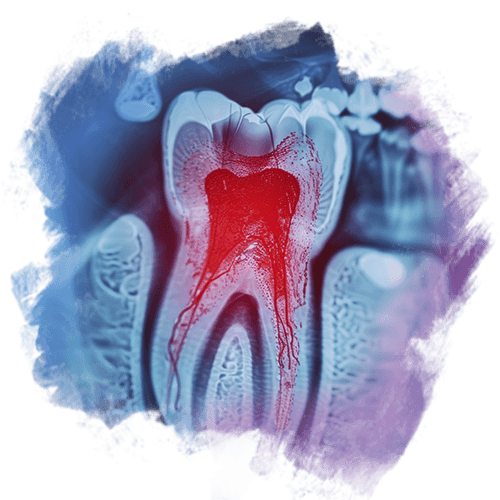
Tooth nerve death, also known as pulp necrosis, occurs when the tooth’s internal neurovascular bundle loses its blood supply and vitality, resulting in the loss of tissue viability. The pulp tissue is composed of blood vessels, nerves, and connective tissue, and serves as the tooth’s sensory center and defense mechanism. When blood flow is interrupted due to infection, trauma, advanced decay, chemical or thermal irritation, or circulatory disturbances, the pulp undergoes irreversible death. This condition is not only about pain — it can also involve infection of the internal tooth tissues, inflammation in the surrounding bone, and even systemic effects.

Tooth nerve death does not always occur suddenly; the process often progresses as inflammation → necrosis → infection → abscess/bone loss.

Diş Sinirlerinin Ölmesi Neden Olur - Diş Siniri Tedavisi

[Total: 0 Average: 0]

Factors That Cause Tooth Nerve Death

Advanced Tooth Decay

When decay passes through the dentin and reaches the pulp chamber, bacteria spread into the pulp, causing pulp inflammation (pulpitis) and eventually necrosis.

Tooth Trauma

Falls, impacts, sports injuries, and sudden forces applied to the tooth.

Hidden necrosis is especially common in anterior tooth trauma cases.

Severe Teeth Grinding (Bruxism)

Continuous microtrauma can increase pulpal pressure and impair blood circulation.

Deep and Improper Restorations

Excessive tooth reduction, high heat generation, or irritating filling materials.

Periodontal Diseases

In advanced gum disease, bacteria reaching the root surface can progress toward the pulp via the root apex.

Advancing Age and Tissue Loss

With age, the pulp chamber narrows, vascular structures weaken, and tissue resistance decreases.

What Happens If a Tooth Nerve Dies? What Are the Symptoms?

  • Sensitivity during chewing
  • Reduced or exaggerated response to hot and cold stimuli
  • Transition from sudden sharp pain to a dull, constant pain
  • Tooth discoloration (grayish–dull appearance)
  • Swelling, abscess, bad taste–odor
  • Reduced sensation in the affected tooth

In some necrotic teeth, there may be no pain at all — patients may only notice a silently progressing infection through discoloration or swelling.

How Is Root Canal Treatment Performed?

Root Canal Treatment (Endodontic Treatment)

This is the most common method.
Stages:

  • Removal of the pulp tissue
  • Shaping and disinfection of the root canals
  • Sealing the canals with a permanent filling material
  • Completion with a final restoration (filling/crown)

In modern endodontics, microscopes, ultrasonic activation, and bioceramic materials increase success rates.

Retreatment (Revision Root Canal Treatment)

Performed in teeth that have already had root canal treatment but failed, requiring re-cleaning and re-filling of the canals.

Apexification / Regenerative Endodontics

In immature young teeth, procedures may be used to close the root apex or promote pulpal regeneration.

Apical Surgery (Apicoectomy)

Surgical removal of the infected area at the root tip.
It is preferred when root canal treatment is insufficient.

The goal is always to preserve the natural tooth.

Single-Item Clinical Approach

Diagnosis + Disinfection + Superstructure Support

  • Radiographic and vitality testing
  • Determination of pulp inflammation level
  • Microbial cleaning and root canal filling
  • Coronal sealing (final restoration)
  • Fiber post/crown when necessary
  • Regular follow-up protocol

This approach is based on tissue preservation, function, and long-term durability principles.

Tooth nerve death is not solely a pain-related condition; it is a complex biological process resulting from circulatory impairment, bacterial invasion, mechanical stress, and trauma. With early diagnosis, proper endodontic techniques, adequate isolation, and modern materials, tooth function can be preserved.

Thanks to current endodontic protocols and microscopic approaches, natural teeth can be maintained in the mouth with high success rates, preserving chewing function, aesthetics, and jaw joint balance in the long term.

Leave a Reply

Your email address will not be published. Required fields are marked *

This is a sample text. You can click on it to edit it inline or open the element options to access additional options for this element.