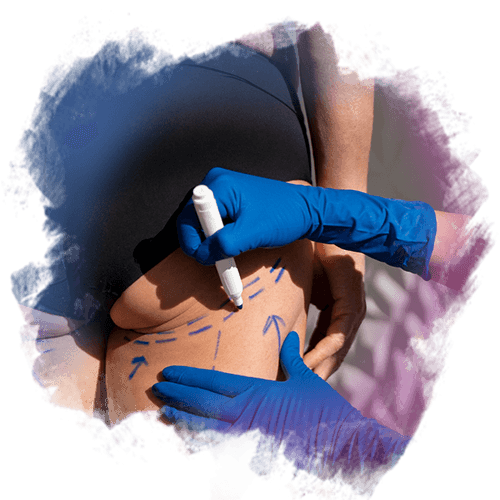
The inner part of the upper thigh is one of the areas in the body most prone to sagging due to its thin skin structure, low supportive tissue, the effects of gravity, and age-related collagen loss. Weight changes, pregnancy, aging, and connective tissue weakness can lead to skin laxity, thinning, and a wrinkled appearance in this area.

Sagging is not only an aesthetic problem; it can also cause skin friction, irritation, inflammation, and discomfort during movement.

The modern aesthetic and plastic surgery approach is based not only on tightening this area but also on restoring deep tissue support and improving skin quality.

Üst Bacak İç Sarkmaları İçin Tedavi Yöntemleri

[Total: 0 Average: 0]

Causes of Inner Thigh Sagging

Loss of Collagen and Elastin

With aging, connective tissue weakens, the skin loses its elasticity, and sagging begins.

Weight Gain and Loss

Repeated stretching and shrinking of the skin leads to damage of elastic fibers.

Muscle Weakness

Weakness of the inner thigh adductor muscles reduces support in the area.

Genetic and Hormonal Factors

Genetic connective tissue weakness and hormonal changes affect skin tone.

Sedentary Lifestyle and Weak Connective Tissue

Low muscle activity → weak fascia → skin laxity cycle.

Treatment Methods

Surgical Thigh Lift (Thigh Lift)

In cases of advanced sagging, excess skin is removed to tighten and lift the area.
If necessary, a combination of liposuction + lifting is performed.

Liposuction

Fat-related fullness can make sagging more noticeable.
After localized fat removal, it is supported with energy-based skin tightening systems.

Note: Liposuction alone may increase laxity if elasticity is low — proper patient selection is important.

Radiofrequency and Microneedling RF

Controlled thermal energy in the subdermal layer increases collagen production and tightens the skin.
It is an effective protocol for mild to moderate sagging.

Ultrasound Tightening (HIFU)

It tightens the SMAS and connective tissue by delivering energy to deep dermal layers.

Injectable Collagen Stimulators

Polycaprolactone, polylactic acid, and certain hyaluronic acid mixtures:

  • Plump the skin
  • Strengthen connective tissue
  • Reduce sagging

PRP and Mesotherapy

Improves microcirculation and enhances skin quality.

Muscle Strengthening and Functional Exercise

Mechanical support is increased by training the inner thigh adductors, gluteus medius, and core muscles.

Single-Item Treatment Guide

Sagging Severity + Skin Quality + Fat Ratio Analysis

  • Mild sagging → RF / HIFU / collagen stimulators
  • Moderate sagging → Liposuction + energy-based tightening
  • Advanced sagging → Thigh lift
  • Thin skin & weak connective tissue → PRP + collagen injections
  • Insufficient muscle support → Functional inner thigh strengthening
  • Weight fluctuation → Nutrition & stable program

This approach is not a single procedure, but a combined planning strategy — the goal is reconstruction at the skin, fascia, and muscle levels.

Inner thigh sagging is not only the presence of excess skin; it is the result of skin quality, connective tissue strength, and muscular stability weakness.

The treatment process is personalized by analyzing skin elasticity, tissue thickness, structural network, and fat distribution.

While non-surgical methods provide strong results in early to moderate stages, in advanced cases surgical lifting achieves a smoother, tighter, and more aesthetic thigh contour.

When inner thigh tissues are supported, both walking biomechanics, daily comfort, and leg silhouette improve significantly.

Leave a Reply

Your email address will not be published. Required fields are marked *

This is a sample text. You can click on it to edit it inline or open the element options to access additional options for this element.