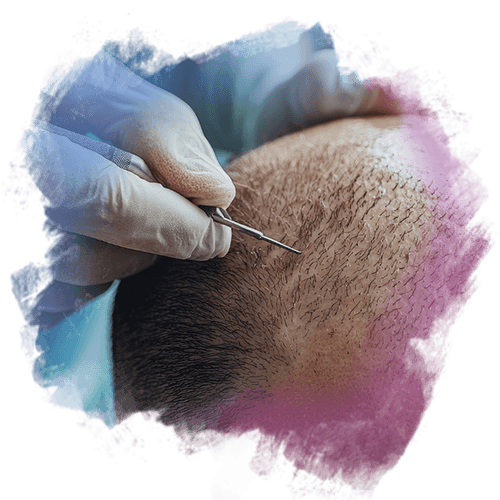
Although hair transplantation is a permanent and effective treatment, in some cases a second or even third session may be required. From a modern hair surgery perspective, this is a common situation and can deliver highly successful results when properly planned.

Hair loss is a dynamic process; genetic factors, hormonal profile (DHT influence), aging, and lifestyle can affect hair density over time. Therefore, after the initial transplant, further hair loss, the desire for increased density, or the need for technical refinement may require a second procedure.

A repeat hair transplant is not only about filling empty areas; it is performed to refine the natural hairline, increase density, correct previous technical imperfections, and achieve a more homogeneous distribution of hair.

A successful revision procedure requires careful donor area management, follicle quality assessment, and strategic density planning.

Saç Ekimi Sonrası Tekrar Saç Ekimi Yapılabilir mi? | Revizyon ve Yoğunluk Artırma Rehberi

[Total: 0 Average: 0]

Why Might a Second Hair Transplant Be Necessary?

Progression of hair loss and expansion of the affected area

Since androgenetic alopecia is a progressive condition, hair loss may continue in areas outside the transplanted zone.

Insufficient density in the first procedure

Some patients initially prefer a more natural but moderate density and may choose to increase it over time.

Incorrect hairline design

Hairlines that were previously created too straight, too sharp, or unnatural can be revised today with a more natural design approach.

  • Correction of technical or surgical errors
  • Direction problems
  • “Doll hair” appearance
  • Low-density area
  • FUT scar camouflage
  • Expectation management based on hair strand structure

Fine hair strands and straight, non-curly hair structure may require more grafts.

How Long Should You Wait Before a Second Hair Transplant?

General surgical protocol:
A minimum of 9–12 months should be waited after the first hair transplant.

After this period:

  • The hair has fully grown in
  • Areas with low density become clearly visible
  • Donor area healing can be evaluated

If an earlier plan is considered, it requires doctor approval and adequate tissue healing.

How Is a Second Hair Transplant Planned?

Revision hair transplantation requires much more precise planning and design.

The following parameters are analyzed:

  • Donor area density (trichoscopy analysis)
  • Graft reserve (remaining follicular capacity)
  • Hair shaft thickness, diameter, and curl pattern
  • Hair transplant scars, patchy appearance, and spacing between hairs
  • Vascularization and tissue quality of the recipient area
  • DHT activity and response to medical therapy
  • Biometric hairline design principles (micro irregularities – zigzag pattern)

The goal is not only to implant grafts into empty areas, but to create a micro-level density architecture.

Which Techniques Are Used?

FUE (Micro motor / Sapphire / DHI)

This is the most commonly preferred method for revision procedures.

Beard and Body Hair–Assisted Transplantation

If the donor area is limited, beard and chest hairs are used as additional donor sources. A hybrid graft planning approach is applied.

FUT Scar Correction

Old FUT scar areas are camouflaged using FUE hair transplantation.

Single-Point Clinical Planning Guide

Donor Management + Hair Loss Control + Natural Hairline Revision

  • Hair loss pattern analysis (Norwood scale)
  • Donor area capacity assessment
  • Hair shaft diameter & follicle quality evaluation
  • Density mapping
  • Anti-DHT treatment optimization
  • Graft preservation strategy
  • Beard graft support plan if necessary
  • Vascularization and tissue preparation for second session
  • Natural micro irregularity & angle design (0.5–1 mm zigzag hairline)
  • Post-op PRP / mesotherapy protocol

This approach is scientific, aesthetic, and focused on tissue preservation.

Medical Support in Repeat Transplantation

Treatment Effect
Finasteride / Dutasteride DHT blockage
Minoxidil Follicle nourishment & phase prolongation
PRP / Growth Factors Stem cell stimulation
Mesotherapy Vitamin–peptide support
LLLT Tissue healing & follicle activation

Goal: to preserve existing hair and strengthen the new transplant.

Common Mistakes

  • Overusing the donor area
  • Creating overly dense implantation that disrupts blood circulation
  • Designing an unnatural hairline
  • Waiting without medical treatment support

Modern approach:
“Donor preservation + natural density + gradual enhancement”

A second hair transplant is medically possible and common, but only successful when properly planned. Each patient has a different hair loss pattern, genetic profile, and tissue capacity. A second session is a process that refines the hairline, increases density, and creates a natural hair architecture.

Leave a Reply

Your email address will not be published. Required fields are marked *

This is a sample text. You can click on it to edit it inline or open the element options to access additional options for this element.