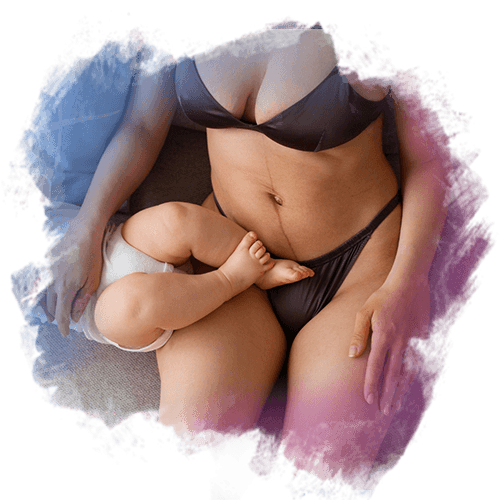
Pregnancy and childbirth are physiological processes that create intense stress not only through profound hormonal changes but also on the muscles, fascia, connective tissue, and postural system. The abdominal region expands, intra-abdominal pressure increases, breathing patterns change, and the abdominal wall–pelvic floor–diaphragm complex is forced into a new balance. During the postpartum period, recovery involves not only the restoration of the abdominal muscles but also the re-establishment of fascial continuity, the return of tissue gliding, the correction of posture, and the holistic reactivation of the core system. For this reason, fascia repair is at the center of both aesthetic and functional approaches during the postpartum recovery process.
Fascia is the connective tissue network that surrounds muscles, organs, blood vessels, and nerves. It is not merely a "membrane" but a biomechanical network that manages body tension, provides support, and transmits muscle-to-bone communication. During childbirth, this network is stretched, its elastic structure is challenged, and the superficial and deep fascial layers begin to function in an uncoordinated manner.
- Plastic Surgery
- Dentistry
- Hair Transplant
- Alternative Medicine
- Bariatric Surgery
- IVF
- Cosmeti̇c Gynecology
- About Us
- Health Tourism
- Treatments
- Plastic Surgery
- Brazilian Butt Lift
- Arm Lift
- Calf Augmentation
- Gynaecomastia
- Mesotherapy
- Mini Tummy Tuck
- Mommy Makeover
- Post Bariatric Surgery
- Six Pack Surgery
- Thigh Lift
- Vaser Liposuction
- Tummy Tuck
- Breast Augmentation
- Breast Lift
- Breast Reduction
- Laser Eye Surgery
- Non-Blade Cataract Surgery With Laser Technology
- Brow Lift
- Ear Surgery
- Face Lift
- Lip Lift
- Neck Lift
- Revision Rhinoplasty
- Tip Rhinoplasty
- Rhinoplasty
- Dentistry
- Endodontic Surgery
- Impacted Teeth
- Dental Implant
- Jaw Tumor
- Jaw Cysts
- Jaw Fracture
- Sinus Lifting And Alveolar Bone Operation
- Surgery Before Prosthesis
- Temporomandibular Joint
- Removable Partial Dentures
- Porcelain Teeth Veneers
- Total Prosthesis
- Porcelain Laminate Veneers
- Aesthetic Tooth Filling
- Full Porcelain Veneer
- Teeth Whitening
- Smile Design
- Zirconium Dental Crowns
- Hair Transplant
- Alternative Medicine
- Bariatric Surgery
- IVF
- Cosmeti̇c Gynecology
- Plastic Surgery
- Certificates
- Videos
- Contact
- Blog
- KVKK