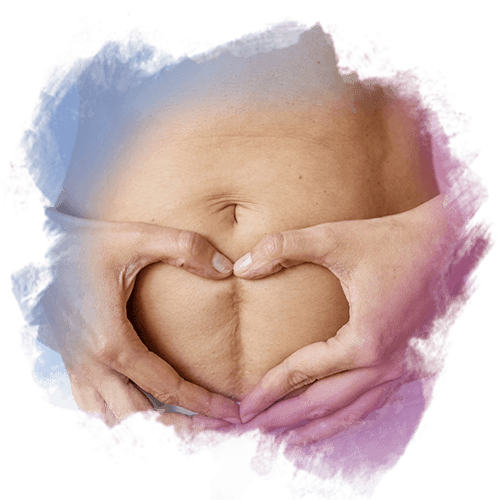
The postpartum period is one of the times when skin elasticity is most challenged. During pregnancy, increased hormones, loosening of the subcutaneous connective tissue, stretching of collagen fibers, and stress on elastin bands can lead to tear-like marks on the skin, known as stretch marks. These commonly appear on the abdomen, hips, thighs, waist, chest, and legs.

Color changes, linear marks, surface irregularities, and subcutaneous tissue laxity are among the most frequent aesthetic complaints after childbirth. Treating stretch marks is not just a superficial procedure; it requires a multi-layered protocol that repairs connective tissue, stimulates collagen synthesis, and activates skin regeneration.

Stretch marks initially appear red-purple (striae rubra) and gradually fade to white (striae alba). Early intervention increases the likelihood of effective results, but even in later stages, collagen-stimulating treatments can improve their appearance.

Doğum Sonrası Karın ve Kalça Çatlağı Tedavisi

[Total: 0 Average: 0]

How Postpartum Stretch Marks Form?

Hormonal Changes and Elastin Weakening

Pregnancy hormones soften connective tissue, stretching elastin and collagen fibers.

Skin Stretching

Rapid weight gain, skin tension, and abdominal growth lead to tissue tears.

Genetic Connective Tissue Structure

Since collagen density is genetic, some individuals have a higher risk of stretch marks.

Changes in Moisture and Blood Supply

Reduced circulation and dermal hydration can leave tissues vulnerable.

Connective tissue predisposition, hormonal fluctuations, rapid weight gain, reduced skin elasticity, and decreased blood flow are the main causes of postpartum stretch marks.

Postpartum Stretch Mark Symptoms

  • Fine linear marks
  • Red-purple or white discoloration
  • Mild depressions and surface unevenness
  • Itching, sensitivity sensation
  • Thinning of the skin and matte appearance

These symptoms are most prominently observed on the abdomen and hips.

Postpartum Stretch Mark Treatment Methods

Fractional Laser

Creates micro-repair channels in the dermis, stimulating collagen and elastin renewal. A multi-session protocol is applied.

Microneedling (Dermapen) + PRP

Microneedles stimulate collagen, and PRP accelerates healing with growth factors. Tissue quality and firmness improve.

Radiofrequency (RF) and Microneedle RF

Provides tightening and surface renewal through heat energy. Effective for deep stretch marks.

Collagen-Stimulating Injections

Biostimulators such as polycaprolactone, polylactic acid, and CaHA strengthen the subdermal matrix, enhancing volume and elasticity.

Mesotherapy and Skin Booster Treatments

Hyaluronic acid, amino acids, vitamins, and peptides soften the appearance of stretch marks.

Surgery for Excess Abdominal Skin

In some patients, mini-abdominoplasty or full abdominoplasty can remove the stretch-marked area.

Home Care and Support

  • Regular moisturizing
  • Vitamin C–containing products
  • Retinoids (post-lactation period)
  • Massage and circulation-enhancing practices
  • Balanced nutrition & hydration
  • Gradual weight loss and weight management


Home care alone is not sufficient, but it supports professional treatment.

Postpartum Stretch Marks Clinical Approach Guide

Collagen Activation + Tissue Regeneration + Skin Tightening

  • Assessment of skin type and stretch mark stage
  • Sequencing plan for laser / microneedling / RF
  • Biostimulator support if necessary
  • PRP / mesotherapy combination
  • Protocol to strengthen moisture barrier
  • Nutrition + collagen support recommendations
  • Session intervals and regular follow-up

This approach is based on the principle of multi-layered tissue repair.

Postpartum abdominal and hip stretch marks are not merely superficial lines; they require subcutaneous connective tissue stretching, remodeling of collagen-elastin fibers, and strengthening of the dermal architecture. With the correct protocol, combined lasers, microneedling technologies, PRP, and collagen-stimulating injections significantly reduce the appearance of stretch marks; the skin tissue becomes firmer, smoother, and more homogeneous.

When the natural transformation process of the maternal body is supported with modern aesthetic medicine methods and personal care routines, visible improvement occurs; providing a satisfying renewal in terms of both aesthetics and self-confidence.

Leave a Reply

Your email address will not be published. Required fields are marked *