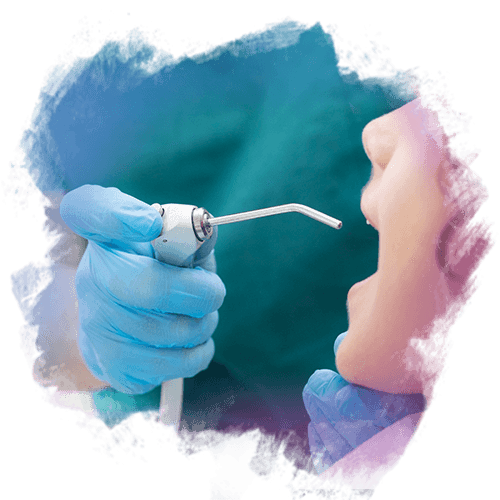
In dentistry, saliva suction devices are essential auxiliary equipment used to control and remove intraoral fluids and to keep the working area dry, visible, and sterile. In clinical practice, managing saliva, blood, diluted materials, aerosol particles, procedural fluids, and intraoral moisture is critical for both treatment quality and infection control.

Especially in restorative, endodontic, surgical, and prosthetic procedures where high-speed handpieces are used, intraoral fluid control preserves the clinician’s field of vision and increases procedural safety. In modern dental practice, saliva suction devices are not merely comfort tools; they are an integral part of clinical success through functions such as infection control, reduction of aspiration risk, protection of the patient’s airway, improvement of material adaptation, and prevention of saliva and blood contamination.

Diş Hekimliğinde Tükürük Emiciler (Aspiratör) Kullanımı

[Total: 0 Average: 0]

Working Principle of Saliva Suction Devices

Saliva suction devices remove fluids and fine particles from the mouth through negative pressure. While high-volume evacuator systems are preferred during canal preparation, surgical procedures, implant applications, and tooth preparations; low-vacuum systems are used for hygiene, control, and intraoral cleaning.

While managing intraoral fluid dynamics, these devices provide advantages such as controlling the air–water mixture, reducing aerosol formation, and lowering the risk of splatter and back-spray.

Types of Saliva Suction Devices and Their Areas of Use

High-Volume Evacuator (HVE)

It is the most effective system for aerosol control.

It is preferred in procedures with high fluid production such as cavitation preparation, surgery, implant procedures, and ultrasonic scaler use.

Advantages: clear visibility, effective fluid management, reduced aerosol, patient safety.

Low-Pressure Saliva Ejector

It is generally used in restorative procedures, control appointments, pedodontics, and procedures with low fluid production.
Placed on the floor of the mouth, it continuously reduces water and saliva flow.

Surgical Aspirator Tips

Finer tips; designed for periodontal surgery, implant procedures, flap surgeries, and bone operations.
They precisely suction blood and irrigation fluids in small areas.

Clinical Importance of Dental Aspiration

Saliva and fluid control directly affect the success rate of dental materials.
An ideal moisture balance during adhesion protocols, composite restorations, root canal fillings, temporary restorations, and impression-taking procedures ensures restorative integrity.

Patient comfort, clarity of the field of vision, aspiration safety, aerosol control, irrigation management, prevention of material contamination, regulation of saliva flow, prevention of soft tissue trauma, and increased procedural speed directly affect clinical performance.

Therefore, every treatment plan includes an aspiration strategy.

Ergonomics and Aspirator Placement Techniques

Correct aspirator positioning facilitates the clinician’s work and increases patient safety.
The aspirator tip should capture the generated spray, prevent water from pooling in the mouth, and stabilize the tongue and cheeks.
Coordination between the clinician and the assistant is optimized through dual suction technique, use of retraction, light alignment, vacuum angle, and hand instrument synchronization.

Single-Clinic Approach Guide

Fluid Management + Field of Vision + Infection Control

  • Intraoral assessment at the beginning of the procedure
  • Determining patient position and aspirator angle
  • Aerosol capture with HVE
  • Combining low-vacuum support when necessary
  • Precise aspiration with surgical tips
  • Retractors + cotton rolls + isolation drapes for moisture control
  • Rubber dam use and integrated aspiration techniques
  • Intraoral cleaning after the procedure

This approach is carried out based on dentofacial safety, a sterile field, material success, and patient comfort.

Aspiration and Infection Control

In procedures with high aerosol formation, aspiration reduces the risk of cross-infection.
The spread of pathogens together with intraoral fluids is reduced.
For this reason, it is mandatory that aspirator tips are single-use or comply with sterilization protocols.

Especially in the post-pandemic period, the combination of high-volume aspiration + rubber dam + pre-procedural antiseptic mouthwashes has become standard.

Saliva suction devices in dentistry are not merely tools for fluid removal; they are fundamental systems that provide ergonomic control, infection management, restorative success, surgical field visibility, and patient safety. Correct determination of the aspiration strategy in every procedure increases both procedural quality and clinical efficiency.

In current dental practice, saliva control is not only a matter of hygiene; it also plays a critical role in adhesion protocols, material performance, aerosol barriers, and biological safety, and systematic aspiration protocols supporting this are an integral part of modern treatments.

Leave a Reply

Your email address will not be published. Required fields are marked *